
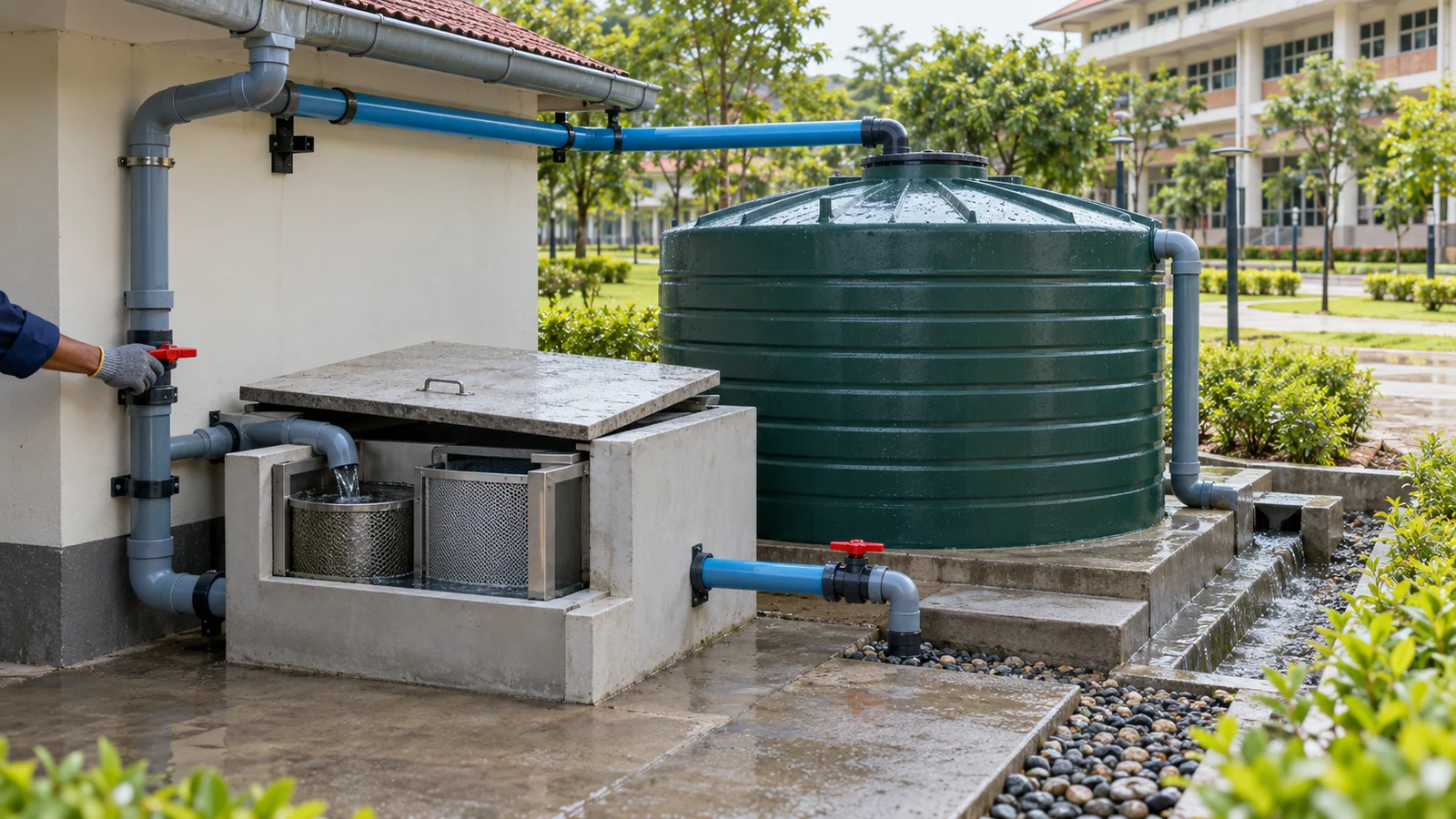
A rainwater-harvesting installation is not complete when the tank is filled or the recharge structure is covered. The system must convey water from the intended catchment, manage debris and first flush, send water to the correct destination, handle overflow safely and remain maintainable after handover. Commissioning checks and a practical operations plan help facilities teams verify that the installation works as designed and identify faults before the next heavy rain.
“Clean the water channels (gutters) often during rainy season”
Central Public Health and Environmental Engineering Organisation
Commission the entire route
Begin with approved drawings and an asset list. Confirm that each roof or surface included in the design is connected to the intended line, that excluded or higher-risk areas remain separate, and that gutters, downpipes, screens, first-flush devices and filters are installed in accessible positions. Compare the finished work with the drawings and record any field change in the as-built set.
Test the system in a controlled way before relying on natural rain. Qualified site staff can verify flow direction and check for leaks, blockages, loose joints, incorrect cross-connections and unexpected ponding. Check valves, pumps, level controls and alarms under the approved commissioning procedure. Confirm that the tank cover, screened vents, access hatch and draw-off points are secure and suitable for the intended operation.
Test the overflow path separately. A storage system will eventually be full, and a filter can become obstructed. Simulate or otherwise verify the approved bypass route using the safe method defined by the design team. Confirm that water cannot enter buildings, electrical rooms, neighbouring property or areas where it may create erosion, flooding or a slip hazard. Where recharge is part of the system, have the responsible technical professional verify the structure and surrounding conditions before acceptance.
Agree what “ready for service” means
Define acceptance criteria before installation work is finished. Depending on the system, criteria may include tested flow paths, accessible cleanouts, functioning first flush, confirmed pump controls, documented overflow, water-quality checks for the intended use, as-built drawings and operator training. Not every criterion applies to every site; the project engineer and owner should set them for the actual design and applicable requirements.
Do not treat commissioning as proof that water is potable or that recharge has improved groundwater availability. Those conclusions require appropriate treatment, testing or monitoring and qualified interpretation. Record what was tested, the method, results, date, responsible person and any limitations. If a result is outside the acceptance range, define the corrective action and retest before the affected component is placed into service.
Assign maintenance by asset and trigger
The Central Public Health and Environmental Engineering Organisation (CPHEEO) advises: “Clean the water channels (gutters) often during rainy season.” Turn that principle into site tasks with named owners. A checklist is more useful when it states what to inspect, how to isolate the component, what condition triggers service, where removed sediment goes and who signs off that the system can restart.
Typical tasks include removing leaves from screens, cleaning gutters, draining first flush as designed, servicing filter media, checking tank covers and vents, inspecting pumps and controls, and confirming that overflow routes remain clear. Schedule pre-season checks and post-storm inspections where appropriate. Frequency should reflect the roof environment, rainfall, debris load, system design and operator capacity—not a generic interval copied from another facility.
Keep maintenance safe. Roof access, confined spaces, electrical equipment, tank entry, excavation and chemical treatment all have hazards that require site procedures and trained personnel. Do not direct staff to enter a tank or recharge structure unless the applicable permit, isolation, atmospheric monitoring and rescue provisions are in place. Bring in qualified contractors for work beyond the team’s competence.
Use a simple performance record
Track enough information to answer operational questions without creating an impractical reporting burden. Useful records can include rainfall, estimated or metered volume captured, amount supplied to each intended use, overflow events, pump run time or energy where available, inspection dates, filter changes, faults, backup supply and water-quality checks required for the use. Keep units and time periods consistent and record when a sensor or meter is unavailable.
Separate measured data from estimates. Roof area multiplied by rainfall and a runoff coefficient can provide an estimated potential, but it is not the same as actual water delivered. A level change may not equal demand if there is leakage, overflow or an unmetered outlet. State the measurement boundary and assumptions so a report does not overstate performance. Review trends with operations: frequent overflow may indicate a supply-demand mismatch, while low capture after rain may point to blocked conveyance or a catchment change.
Handover should support the next operator
Provide the facilities team with approved and as-built drawings, equipment manuals, warranties, supplier contacts, inspection procedures, isolation points, training records and an asset register. Walk the system physically with operators—from catchment to final use or recharge—so they can see where to inspect and how to respond to a blockage, spill or pump fault. Record open issues and assign due dates rather than leaving them in meeting notes.
Review the system after the first significant rainfall events and again at the end of the wet season. Compare observations with the design assumptions: did water follow the intended route, did the first flush operate, was overflow safe, did users need the supply, and were filters accessible? Use the findings to update drawings, maintenance tasks and any future phase. Changes to a roof, process, tenant or drainage layout should trigger a catchment and safety review.
Handover essentials
Commissioning and maintenance make a rainwater asset usable over time. A clear handover connects the design intent to the people who operate the system, while measured records help them distinguish theoretical potential from service actually delivered. Site-specific engineering, safety controls and current local requirements remain essential throughout the asset life.
- Approved and as-built system drawings with catchment boundaries and overflow paths
- Commissioning records, unresolved defects and corrective-action status
- Asset-level inspection, cleaning and safe-isolation procedures
- Named owners, contractor contacts and escalation route
- Monitoring method, units, data limitations and review cadence
- Training attendance and records of post-storm inspections
Key takeaways
- Test the complete route from catchment through treatment to use, storage or approved recharge.
- Set acceptance criteria and record defects before handover.
- Assign maintenance tasks, triggers, safe access and escalation owners.
- Track rainfall, harvested volume, use, quality, faults and corrective actions over time.
Related SWR guides and services
Sources and further reading
Calculation examples are illustrative planning calculations, not reported project results. Confirm current Indian and site-specific requirements before applying international guidance.