
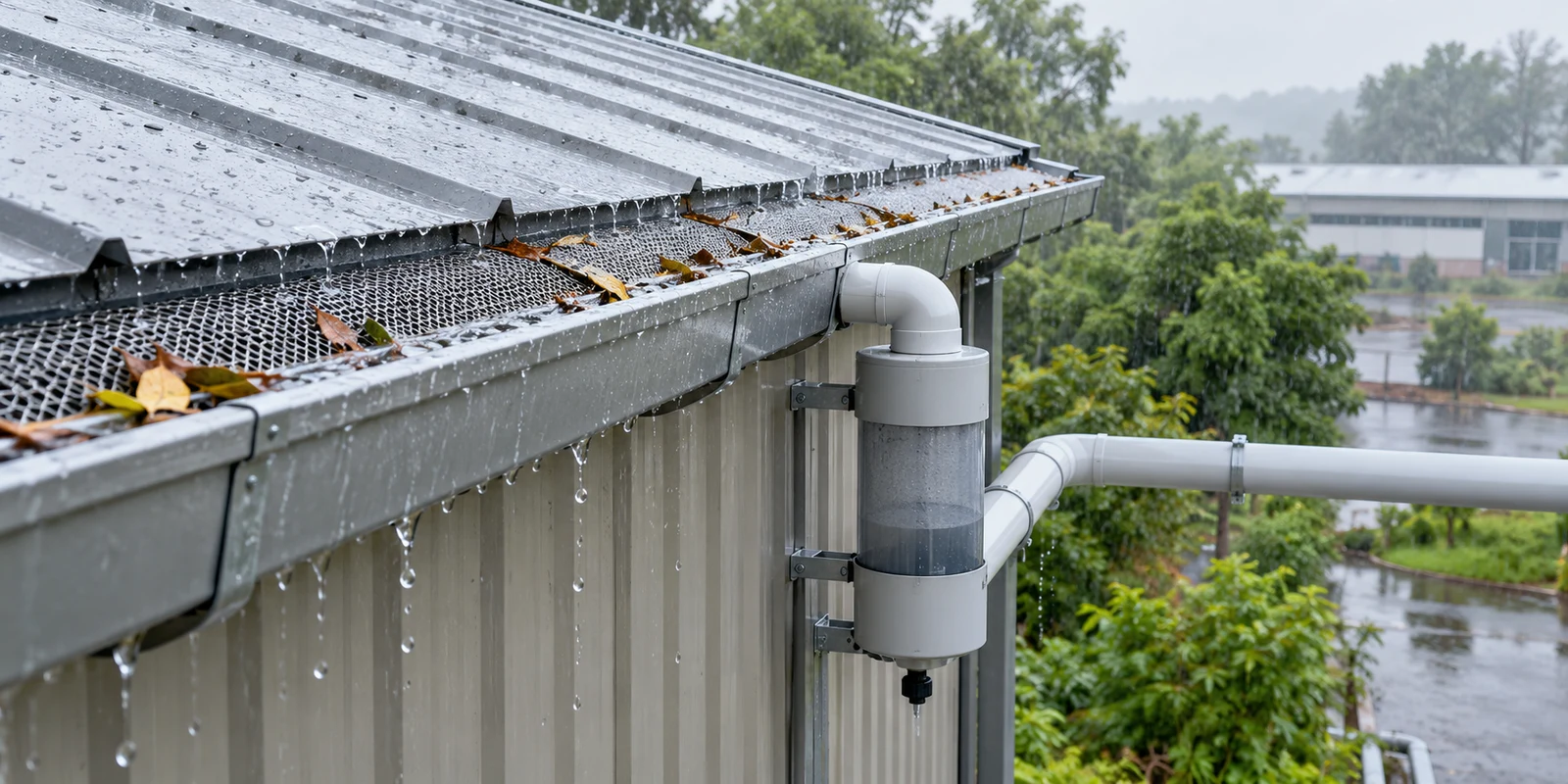
Rain falling on a roof is not automatically clean water. The collection surface, surrounding activities, dry-period debris, gutters, screens and the way a system is maintained can all influence what reaches storage or recharge. A strong rainwater-harvesting plan therefore begins with a catchment-quality review, then connects that review to first-flush diversion, filtration, end use and routine inspection.
“used to flush off the water received in first shower.”
Madhya Pradesh Pollution Control Board
Map catchments by surface and risk
Walk the roof and drainage route. Record the surface material, condition, slope, downpipes and nearby activities. Look for dust, leaves, bird access, overhanging branches, air-conditioning exhaust, process emissions, stored materials, maintenance chemicals or areas where runoff may contact vehicle activity. The purpose is not to label every roof unsafe; it is to distinguish areas that can be managed together from those that need exclusion, separate handling or further assessment.
On large campuses, divide catchments into manageable zones. A clean roof and a service yard should not be combined simply because their drains are close. Mark where each flow currently goes, what happens during a spill or roof repair, and where water would overflow if a screen blocked. Confirm the map against the physical site; drawings may predate building additions, new equipment or changed use.
Understand what first flush can—and cannot—do
Dust and debris can accumulate during dry periods and be carried by the first rain. The Madhya Pradesh Pollution Control Board describes first flush as a device “used to flush off the water received in first shower.” Its purpose is to divert initial runoff before it enters storage or recharge. The device must match the catchment and be maintainable; its discharge should not create ponding, erosion or a path back into the system. Do not apply a fixed diversion duration or volume without a suitable design basis.
First flush is one barrier, not a guarantee of water quality. It does not correct a contaminated roof, remove every dissolved pollutant, disinfect water or replace filtration and end-use treatment. The operating plan should say who resets or cleans the device, how it behaves after a long dry period, and what happens when a spill or maintenance activity may have affected the roof.
Design screens, filters and access together
Screens at roof outlets can intercept leaves and larger debris, but a very fine mesh may block and cause roof ponding if it is not suited to the flow and inspection routine. Place cleanouts where an operator can reach them safely. Keep filters accessible for cleaning or media replacement, and record what condition triggers service. If a filter is hidden behind landscaping or a parked vehicle, the maintenance plan is unlikely to work as intended.
Choose filtration according to the source and intended use. A coarse debris screen, sedimentation step, filter and disinfection are not interchangeable. If water is intended for drinking or another higher-risk use, qualified professionals should define treatment, testing and regulatory requirements. A visual check or clear appearance alone cannot establish that water is safe to drink.
Treat recharge as a separate technical decision
When the objective is groundwater recharge, assess source quality and the receiving site before selecting a pit, trench, shaft or well. Surface runoff can carry more sediment and pollutants than a clean roof catchment. Do not direct suspect water toward a recharge structure without an appropriate technical assessment and treatment approach. Consult hydrogeological conditions, groundwater depth, soil or rock characteristics, nearby contamination sources, utilities and the possibility of seasonal waterlogging. Recharge methods and permissions vary by place; verify local requirements with the relevant authority and qualified practitioners.
Also design a bypass. A recharge system can be full, blocked or unavailable for maintenance. Define a safe overflow route and inspect it during commissioning and after major storms. The bypass should not send water toward building entrances, electrical areas, neighbouring property or a location where erosion or ponding creates risk.
Create a catchment-quality operating routine
Before the rainy season, clean the catchment and gutters, inspect roof outlets, check screens and first-flush operation, and confirm that filters are serviceable. After a long dry interval or significant storm, inspect again for accumulated debris, blockages and unexpected overflow. The exact frequency should reflect local weather, roof condition and the system design; an annual task alone may not be enough for every site.
Keep a simple record of inspections, cleaning, filter changes, rainfall events, incidents and any water-quality checks. Link each asset to a responsible team and escalation contact. If a roof is painted, repaired, chemically cleaned or used for temporary storage, review whether harvesting should be isolated until the catchment is verified and the system is safely recommissioned.
Pre-season checklist
Catchment quality is an operating responsibility as much as a design input. Separating risk zones, maintaining first flush and filters, and defining safe overflow make the water system easier to manage. They do not replace professional assessment or guarantee potable quality; they create a more defensible path from rainfall to the use or recharge objective.
- Confirm the catchment map and update it for building or process changes.
- Remove accumulated debris and inspect gutters, outlet screens and downpipes.
- Test the first-flush device and verify a safe discharge destination.
- Clean filters and confirm access, replacement media and service ownership.
- Verify that storage and recharge components are covered, accessible and intact.
- Check that overflow and isolation arrangements work as designed.
- Confirm treatment and testing requirements for each intended use.
Key takeaways
- Map roof surfaces by material, activity and contamination risk.
- Treat first flush as one barrier, not a substitute for catchment cleaning or water testing.
- Design screens, filters, bypass and safe discharge together.
- Assign routine inspections and keep records of maintenance and water quality.
Related SWR guides and services
Sources and further reading
Calculation examples are illustrative planning calculations, not reported project results. Confirm current Indian and site-specific requirements before applying international guidance.