
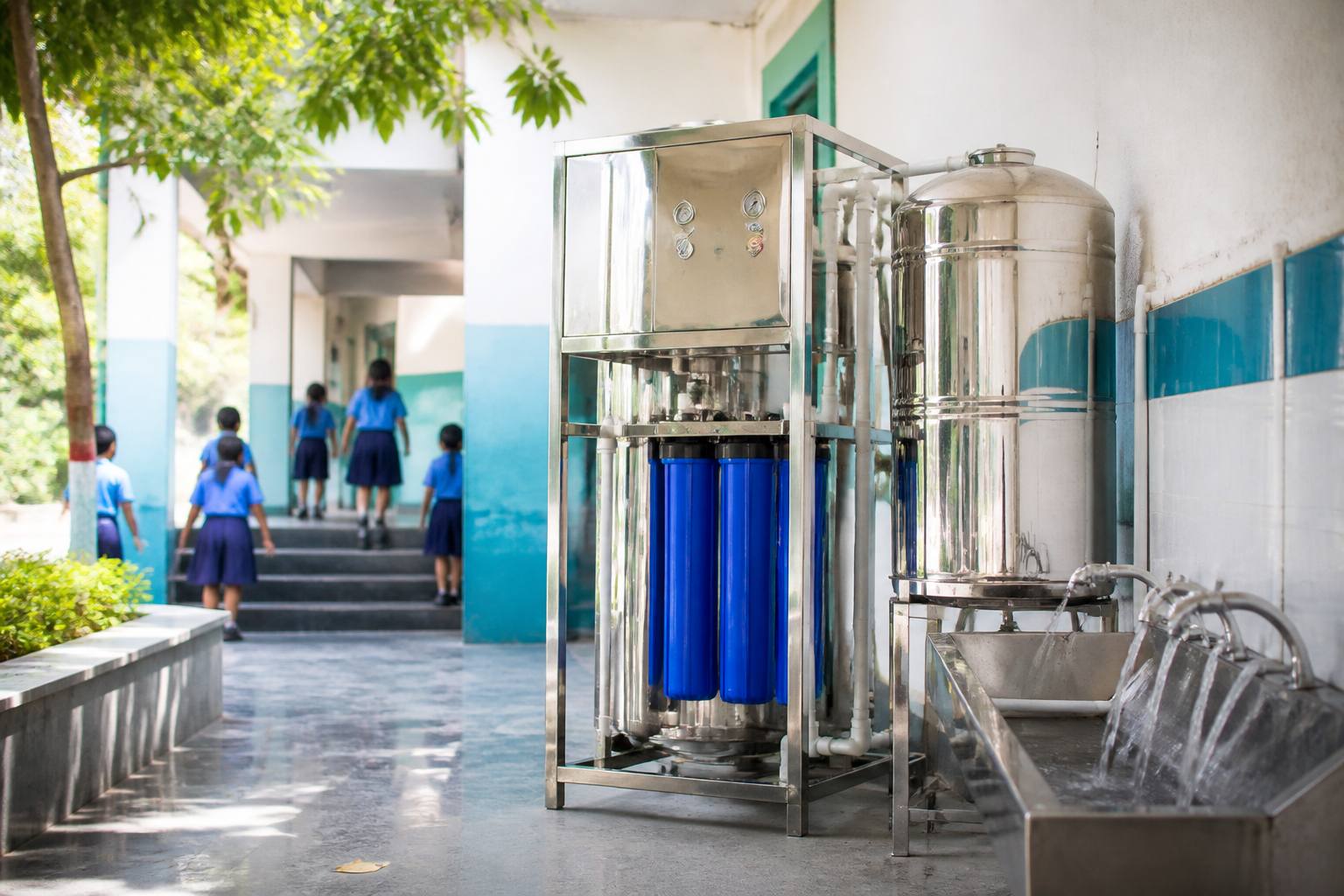
A useful CSR proposal gives decision-makers enough information to judge need, intervention, cost and evidence of results. For water and solar infrastructure, it must explain operation after handover. This guide focuses on a detailed project report, or DPR, for schools, hospitals, communities and public institutions. It extends our existing guide to long-term CSR sustainability by concentrating on approval documents, budgets and evidence required before committing funds.
“making available safe drinking water”
Schedule VII activity wording reproduced by India’s Ministry of Corporate Affairs
State the problem with a verifiable baseline
Describe location, institution, users and existing service. For drinking water, record reliability, quality evidence, storage and current access. For solar, collect bills, daytime load, roof details and intended benefit. Distinguish information supplied by the institution from assessment measurements. Record dates and sources so the proposal can be updated when conditions change.
Avoid selecting equipment before establishing the problem. Treatment may not solve unreliable raw-water supply; solar generation may not provide outage backup unless the electrical arrangement supports it. Record options considered and why the proposal fits. Discuss requirements with users and the future operator, whose constraints can affect location, access, capacity and maintenance. Include unresolved questions in the assessment schedule.
Connect the proposal to the CSR process
Identify the purpose and activity category for review by the company’s CSR and legal teams. Schedule VII includes safe drinking water and environmental sustainability, but eligibility depends on the complete project and current requirements. A proposal heading does not establish compliance. Confirm implementing arrangements, approvals and reporting using current official guidance before classifying expenditure.
Keep the operating case and regulatory review connected but distinct. Engineering should explain what will be delivered; the responsible corporate team should confirm approval and documentation obligations. Record conditions and outstanding items. A pending permission or eligibility review must not appear complete. State who will resolve it and whether implementation depends on that decision, so procurement does not move ahead on an unsupported assumption.
Make technical scope specific enough to procure
Describe inputs, capacities, quality or performance requirements, boundaries and exclusions. Include drawings, survey findings and missing information needed for design. Water systems need source-to-use coverage of treatment, storage and safe distribution. Solar needs roof and structural assessment, electrical integration, protections and maintenance access. Clarify civil works and reinstatement responsibilities rather than leaving them between suppliers.
State commissioning submissions: test results, equipment details, drawings, instructions and training records. Define acceptance criteria before comparing quotations. Offers covering different civil works, monitoring or protection are not directly comparable. Use a common scope and deviation schedule so procurement can identify the offer that delivers the agreed service. Include the procedure for resolving defects found during acceptance.
Budget for operation as well as installation
Separate works, equipment, transport, installation, testing, training and documentation. Include taxes and contingency with a stated basis. Obtain quotations for material items and identify provisional allowances. For multiple sites, separate programme costs from site works so changing the number of locations does not distort the total. State the quotation validity and assumptions for transport or access.
Prepare recurring costs for electricity, consumables, laboratory testing, cleaning, repairs and replacement. Identify who pays after handover and whether they have agreed. Funding equipment does not establish an operating budget. Explain the response if an institution cannot cover a necessary repair or obtain a consumable. Include expected replacement responsibilities in the agreement rather than leaving them to a later dispute.
Define outputs and outcomes separately
Installed equipment, trained operators and commissioning are outputs. Reliable service, acceptable quality and electricity delivered over time are outcomes. List both with baseline, target, evidence, frequency and owner. For beneficiaries, explain whether the count means enrolled users, people with access or measured actual users. Avoid adding the same people repeatedly across visits or distribution points.
Do not claim health, attendance or livelihood improvement solely from installation. Those outcomes require appropriate evaluation and evidence. Use a statement the data supports. Service uptime and quality can be practical early indicators for water. Metered generation and documented use are more informative than installed kilowatts alone for solar. Match measurement effort to the decision and the claim, retaining privacy protections for people surveyed.
Assign ownership and handover responsibilities
Identify asset owner, operator, implementing partner and escalation contact. Record access, permissions, warranties, maintenance and spare availability. Train operators in a suitable language and demonstrate routine tasks. Confirm understanding rather than treating an attendance signature as competence. Clarify which faults they can address and which require a qualified technician.
Use a handover checklist with defects, dates and responsibility. Store documents where the institution can retrieve them after staff change. Provide a route for users to report problems and for the corporate partner to learn about major interruptions. Agree follow-up reviews proportionate to the project and include their cost. Confirm who holds keys, system credentials and supplier contacts without publishing those details in a public impact report.
Prepare the approval and evidence pack
Summarise need, scope, total and recurring costs, schedule, outcomes and uncertainties. Attach assessment, quotations, permission status and monitoring plan. A decision note should state the approval sought and conditions before implementation. Keep a version and date so teams use the same scope. Record material changes after approval, including reasons and the person authorising them.
Link invoices and completion evidence to the scope. Report progress against indicators, including delays and service problems. Confirm whether independent impact assessment is required under current rules for the company and project; an internal report does not automatically satisfy it. The free DPR template provides editable sections for this record and operating handover. Use it as a starting structure, then add requirements specific to the project and current corporate policy.
Questions for your next review
Before submitting the proposal, run a handover rehearsal on paper. Ask the intended operator to explain a normal working day, a supply interruption, a quality failure and a breakdown. Identify who has authority to stop service, who contacts maintenance and which budget pays for replacement parts. Check whether the organisation accepting the asset has agreed to these responsibilities in writing. Ask a beneficiary representative whether the proposed service hours, location and access rules match actual needs. Record unresolved concerns as approval conditions with owners and dates. Finally, verify that the project budget, implementation schedule and outcome indicators describe the same scope. A smaller proposal with clear operating ownership is easier to assess than an ambitious document whose recurring responsibilities remain unassigned.
Key takeaways
- Establish need before equipment selection.
- Compare quotations against a common scope.
- Assign and fund recurring operation.
- Measure outcomes proportionately to the claim.
Free tools for this topic
Sources and further reading
Calculation examples are illustrative planning calculations, not reported project results. Confirm current Indian and site-specific requirements before applying international guidance.